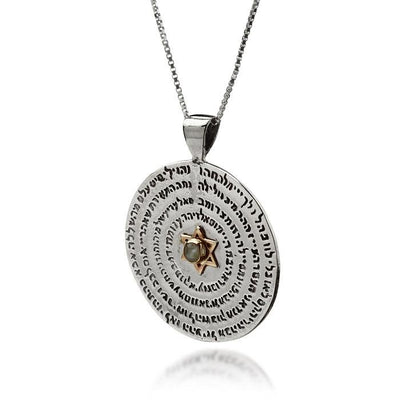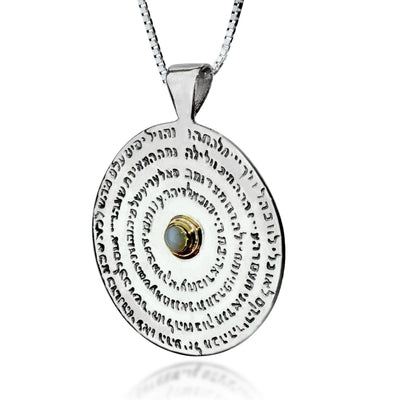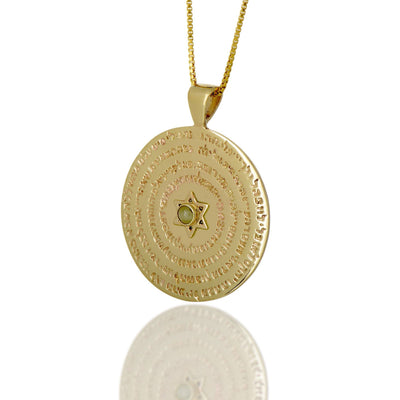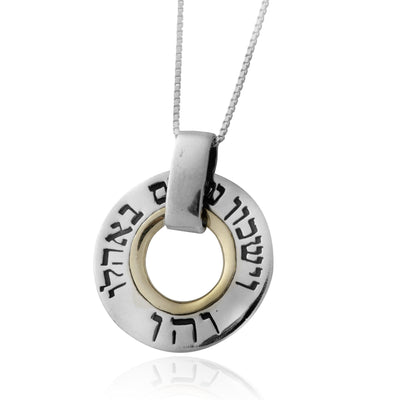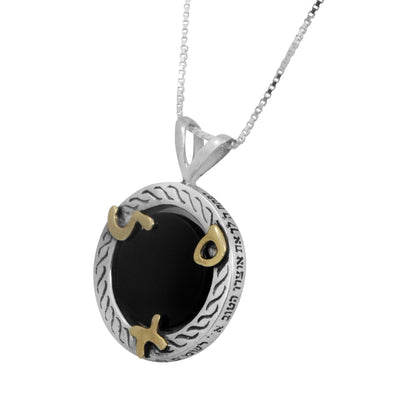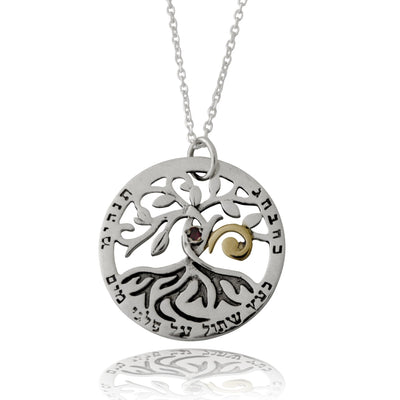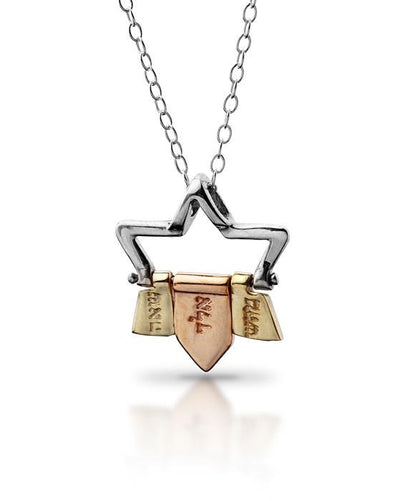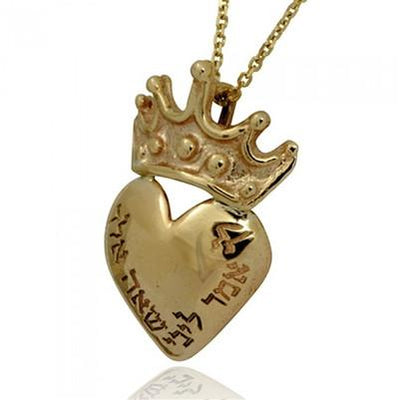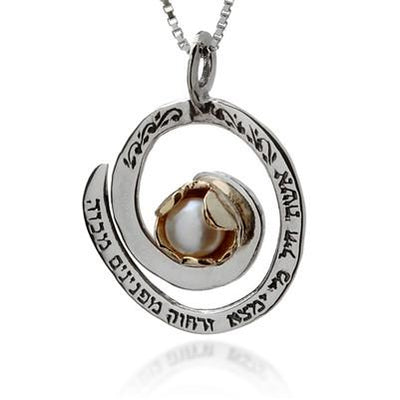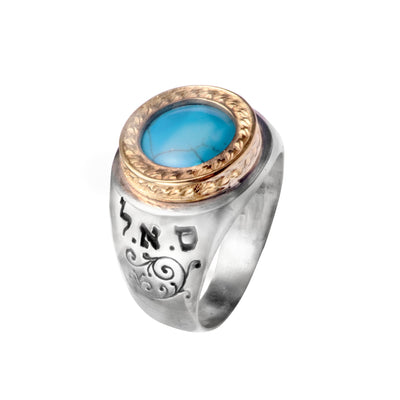


72 names of God According to Kabbalah, the spiritual power of the Hebrew letters can have influence on our lives. Kabbalah teaches that the combination of certain letters can work as a tool to help us overcome the obstacles of our material existence. One such Kabbalist tool is the 72 names of God. The 72 names of God are presented as a table of three letter sequences. Many of us have encountered at least some of these sequences in Jewish jewelry, such as the widely popular "Aleph-Lamed-Hey". What are these sequences and what do they mean? Why does Kabbalah consider these sequences a secret to understanding their influence on our existence?
The of the 72 names chart is a Kabbalistic spiritual key for protection, healing, love, abundance, strength the power to make changes. According to the Kabbalah, The Creator has 72 names. We can employ Creator's sacred names through these three letters sequences. The sequences are not real words. Interestingly, no one knows how to pronounce them. Each sequence believed to posses a segula, a quality for a certain aspect in life. Aleph-Lamed-Hey, for example, is a segula against the evil eye. See 72 names of God chart at bottom.
|
|
How did the Kabbalist come up with that table? The source for the 72 names of God is found in the book of Exodus, in three successive psalms in chapter 14: 19- 21.

19: And
the angel of God, who went before the camp of Israel, removed and went
behind them; and the pillar of cloud removed from before them, and
stood behind them; 20: and
it came between the camp of Egypt and the camp of Israel; and there was
the cloud and the darkness here, yet gave it light by night there; and
the one came not near the other all the night. 21: And
Moses stretched out his hand over the sea; and the LORD caused the sea
to go back by a strong east wind all the night, and made the sea dry
land, and the waters were divided. ------------------------------------------------------------------------
The 72 names of God are revealed if you follow these steps:
Writing the three psalms in Hebrew vertically with no spaces - psalm 19
from right to left, psalm 20 from left to right, and psalm 21 from
right to left. This table is a result of Kabbalists' work of decoding
the Bible which lasted for hundreds of years by generations of
Kabbalists. The Kabbalah perceives the Bible as an encrypted text that
needs to be decoded in order to reveal deeper layers that hold within
them secrets and spiritual energy. The 72 names of God exemplify how these hidden secrets lie beneath the surface layer of the Biblical plot.
What happens in these passages from the book of Exodus? Consider the
following scene described in the Book. Under the leadership of Moses,
the people of Israel stand on the banks of the Red Sea, while trying to
escape from the Egyptian army. Pharoh's powerful and well-equipped army
is after them. The Israelites, out of desperation and fear, plea to
God: "hast thou taken us away to die in the wilderness?" Did the
Israelites forget all the miracles that God had performed in Egypt for
their miraculous rescue? The Kabbalah explains that the fear is derived
from the human ego. As the red sea parts and the Israelites begin to
walk through it, they must overcome the ego and demonstrate complete
and unconditional faith. This is how Faith turns into reality.
The secret is found in the text. The Bible is, in fact, a collection of
encrypted messages that explain how to overcome human faults and
challenges we face daily. The 72 combinations of God fight off the
negative energy that is produced by the human ego. Thus, the 72 names
work as a sacred tool that mediates between the earthly and the
spiritual worlds. These combinations enhance the power to bring changes
in various aspects of our lives. For example, the best known
combination, Aleph-Lamed-Dalet, is believed to ward off the evil eye.
Shin-Aleph-Hey is believed to posses the quality of helping us find
love and strengthen relationships. According to Kabbalah, the 72 names
of God bring us closer to life's joyful secrets.
72 names of God chart:
 
|
|
|